Search engines have changed. Again.
We’ve moved from the era of:
- keyword stuffing
- robotic SEO copy
- “10x your traffic” fluff
- pages written purely for algorithms
Now we’re entering the age of AI-powered search, semantic understanding, and intent-driven discovery.
Translation?
If your content only exists to manipulate rankings, it’s probably already losing.
Modern search engines – and AI systems like Google AI Overviews, ChatGPT search experiences, and conversational discovery engines – increasingly reward content that genuinely helps people.
That’s where user-oriented content comes in.
User-oriented content is content built around:
- real user needs
- search intent
- semantic relevance
- usability
- trust
- contextual understanding
Not just keywords.
Not just traffic.
Not just ‘SEO hacks’.
And definitely not the digital equivalent of someone yelling:
‘BUY NOW!!!’ in a crowded elevator.
This guide breaks down:
- what user-oriented content actually means
- how it differs from user-generated content (UGC)
- why AI search changes everything
- how semantic SEO fits into modern content strategy
- how to create content that ranks and resonates
Let’s get into it.
You can also explore our related guide on What Is User-Focused Content? for additional people-first SEO insights.
Quick Answer
User-oriented content is content designed to help users solve problems, answer questions, or achieve goals effectively. It prioritises search intent, readability, semantic relevance, usability, and trust over keyword stuffing or search engine manipulation.
In modern SEO, user-oriented content also helps AI systems understand contextual meaning, entities, and topic relationships.
AI Overview Summary Answer
User-oriented content focuses on creating genuinely helpful experiences for users while also helping search engines and AI systems understand content contextually.
Key principles include:
- search intent alignment
- semantic SEO
- topical depth
- readability
- expertise and experience
- answer satisfaction
Why it matters:
- improves SEO rankings
- increases engagement
- supports AI Overview visibility
- builds trust and conversions
- future-proofs content strategy
Practical takeaway:
Stop creating pages for keywords. Start creating resources for human and AI understanding.
What Is User-Oriented Content?
User-oriented content is content intentionally designed around what users:
- need
- expect
- search for
- struggle with
- want to accomplish
Think of it as:
SEO with empathy.
Or:
Content strategy that finally remembers humans exist.
Instead of obsessing over keyword density like it’s 2009, user-centric content focuses on:
- solving problems
- satisfying intent
- improving usability
- building trust
- creating meaningful experiences
It’s closely related to:
- people-first content
- audience-focused content
- customer-centric content
- helpful content
- intent-driven content
And increasingly, it’s becoming the foundation of modern SEO.
Because search engines are evolving from:
Does this page contain the keyword?
to:
Does this page actually help?
Big difference.
Why AI Search Changes User-Centric Content
This is where things get interesting.
Search is no longer just search.
AI systems now interpret:
- meaning
- relationships
- context
- entities
- conversational intent
- semantic relevance
In other words:
Google is no longer matching words.
It’s matching ideas.
That changes the content strategy dramatically.
From Keywords to Semantic Search
Old-school SEO focused heavily on exact-match phrases.
Modern AI search focuses on:
- topical relevance
- semantic relationships
- contextual meaning
- user satisfaction
For example, Google understands that:
- user-oriented content
- people-first content
- audience-focused content
- helpful content
- customer-centric SEO
are all closely related concepts.
You no longer need to repeat the same phrase 47 times like an over-caffeinated parrot.
Semantic search allows AI systems to understand intent beyond exact wording.
That’s why modern content needs:
- topical depth
- entity relevance
- contextual coverage
- natural language
Not robotic keyword spam.
AI Search Engines Prioritise Answer Satisfaction
AI-powered search systems increasingly evaluate:
- whether the content answers the question clearly
- whether users continue searching afterwards
- whether the page demonstrates expertise
- whether the content covers related follow-up questions
This means modern SEO is less about:
ranking pages
and more about:
building comprehensive answer ecosystems.
Fancy phrase. Important idea.
If your article answers:
- the main question
- related questions
- user concerns
- practical next steps
you become more useful to:
- readers
- search engines
- AI retrieval systems
Everybody wins.
AI Overviews Reward Structured, Helpful Content
AI-generated summaries often pull from content that:
- defines concepts clearly
- uses structured headings
- includes concise answers
- demonstrates expertise
- provides semantic completeness
That means client-oriented content should include:
- direct definitions
- scannable formatting
- FAQ sections
- comparison tables
- contextual subtopics
- entity-rich explanations
Basically:
make your content easy for both humans and robots to digest.
The future of SEO is:
- readable
- structured
- semantic
- conversational
Not bloated.
Not vague.
Not “synergy-driven digital transformation excellence.”
Please. No more of that.
User-Oriented Content vs User-Generated Content
This distinction matters because search results often confuse the two.
They are not the same thing.
| User-Oriented Content | User-Generated Content |
| Created for user needs | Created by users |
| Focuses on helpfulness and intent | Focuses on authenticity and participation |
| Part of SEO + UX strategy | Part of community/social strategy |
| Written by brands or publishers | Written by customers or audiences |
| Optimized for usability and relevance | Optimized for engagement and trust |
User-Oriented Content Example
A detailed tutorial helping users solve a technical problem step-by-step.
User-Generated Content Example
Customer reviews, testimonials, forum posts, or uploaded product photos.
Both are valuable.
But user-focused content is specifically about:
designing information around user success.
Why User-Oriented Content Matters for SEO
Modern SEO is increasingly tied to user experience.
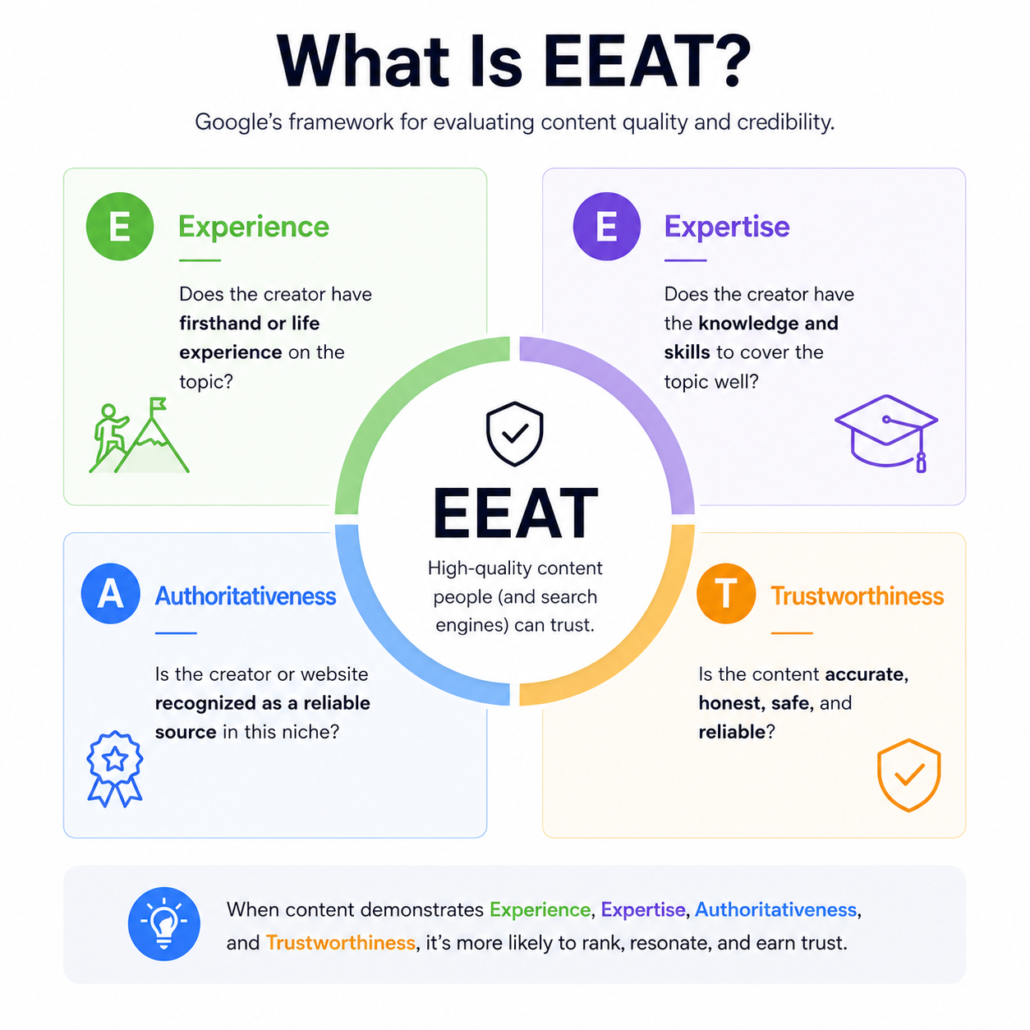
Google’s Helpful Content system, EEAT principles, and AI-driven search models all reward content that demonstrates:
- expertise
- trustworthiness
- usefulness
- contextual depth
That means user-focused content directly impacts SEO performance.
Better Search Intent Satisfaction
Search intent is the “why” behind a search query.
If someone searches:
“how to improve content readability”
they probably want:
- formatting tips
- examples
- usability advice
- readability tools
Not:
- three paragraphs of vague marketing jargon
- a life story
- “content is king”
User-oriented content aligns with what users actually came for.
Revolutionary concept, honestly.
Improved Engagement Signals
Helpful content naturally improves:
- dwell time
- scroll depth
- engagement
- interaction
- retention
Users stay longer when the content:
- answers questions clearly
- feels trustworthy
- is easy to navigate
- doesn’t waste their time
No one enjoys battling giant walls of text that look like legal disclaimers from the underworld.
Stronger Conversion Rates
People convert when they trust you.
User-oriented content builds trust because it prioritises:
- clarity
- usefulness
- expertise
- transparency
Helpful content creates:
- better user journeys
- stronger relationships
- lower friction
- higher conversion potential
Turns out:
helping people works surprisingly well.
Future-Proof SEO Strategy
Algorithms evolve constantly.
Human needs?
Less so.
Search engines increasingly reward:
- real expertise
- topical authority
- original insights
- semantic relevance
- useful experiences
That makes customer-focused content one of the safest long-term SEO strategies available.
Semantic SEO and User-Oriented Content
Semantic SEO is the engine behind modern search understanding.
Instead of viewing pages as isolated keyword targets, AI systems evaluate:
- topic relationships
- entities
- contextual meaning
- thematic depth
This is where user-focused content becomes incredibly powerful.
Because naturally helpful content tends to:
- cover related subtopics
- answer adjacent questions
- connect relevant concepts
- build topical authority
For example, a strong article about client-centered content should naturally discuss:
- EEAT
- semantic search
- AI Overviews
- search intent
- UX writing
- readability
- topical clusters
- conversational search
That semantic richness helps AI systems understand:
This page deeply understands the topic.
That’s how modern topical authority works.
When to Use User-Focused Content
Pretty much everywhere.
Blog Posts
Educational content answering user questions.
Example:
- “How to Improve Website Readability”
SaaS Landing Pages
Pages focused on solving customer pain points instead of listing 900 features nobody understands.
E-commerce Category Pages
Helpful buying guides, FAQs, and educational introductions.
Knowledge Bases
Support content optimised for usability and problem-solving.
Tutorials
Step-by-step walkthroughs users can actually follow without crying softly into their keyboard.
Comparison Pages
Balanced comparisons help users make informed decisions.
Step-by-Step Workflow for Creating User-Oriented Content
Here’s the practical framework.
Step 1 – Identify Search Intent
Understand why users are searching.
Main intent types:
- Informational
- Commercial
- Transactional
- Navigational
Intent alignment is the foundation of helpful content.
Step 2 – Understand User Pain Points
Find real frustrations using:
- forums
- support tickets
- reviews
- SERP analysis
- People Also Ask results
Look for:
- confusion
- objections
- unanswered questions
- recurring problems
That’s where great content ideas live.
Step 3 – Structure Content for Readability
Good formatting is underrated SEO.
Use:
- headings
- bullets
- tables
- visuals
- short paragraphs
- whitespace
Because readers scan before they commit.
Modern content UX matters.
A lot.
Step 4 – Add Real Experience and Expertise
Generic AI content is flooding the internet.
The advantage now comes from:
- firsthand experience
- original insights
- practical examples
- case studies
- nuanced expertise
Experience is becoming a major differentiator in AI search visibility.
Step 5 – Optimise Without Over-Optimising
Modern SEO should feel natural.
Focus on:
- semantic relevance
- topical depth
- entities
- internal linking
- natural keyword placement
Avoid:
- keyword stuffing
- repetitive phrasing
- awkward headings
- artificial optimization
If your article sounds like it was written by a malfunctioning SEO plugin, rethink the approach.
Step 6 – Measure Performance
Track:
- rankings
- engagement
- conversions
- scroll depth
- time on page
- retention
User-focused content is measurable.
If users bounce instantly, something’s broken.
Examples of User-Oriented Content
Example 1 – Bad SEO-First Content
“User-oriented content is important because user-oriented content helps businesses optimise user-oriented content for SEO.”
Painful.
Repetitive.
Soulless.
Example 2 – Better User-Focused Content
“User-oriented content helps readers solve problems quickly and clearly by prioritising usability, intent satisfaction, and actionable insights.”
Cleaner.
More useful.
More human.
Much less likely to trigger existential despair.
Common Mistakes
Writing Only for Keywords
Keyword obsession destroys readability.
Ignoring Search Intent
Wrong format = wrong outcome.
Publishing Generic AI Content
AI can assist content creation.
But generic AI sludge with zero expertise?
Not the move.
Weak Formatting
Nobody wants to read giant text bricks.
Lack of Expertise
Surface-level content rarely builds authority.
Clickbait Headlines
If your headline promises enlightenment and delivers disappointment, users notice.
No Actionable Takeaways
Users should leave smarter than they arrived.
Best Practices Checklist
Before publishing, ask:
- Is the content intent-aligned?
- Is it genuinely useful?
- Is it easy to scan?
- Does it answer follow-up questions?
- Does it demonstrate expertise?
- Is it semantically rich?
- Is it optimised for AI understanding?
- Is it mobile-readable?
- Does it include helpful examples?
- Is the formatting clean?
- Are internal links included?
- Does it provide real value?
If yes:
excellent.
If not:
back to the content cave.
FAQ
User-oriented content is content designed around user needs, search intent, usability, and helpful experiences rather than purely around search engine rankings.
Traditional SEO content may focus heavily on rankings and keywords. User-oriented content prioritises usefulness, semantic relevance, readability, and user satisfaction while still supporting SEO.
Absolutely. It aligns with Google’s Helpful Content system, semantic search, EEAT principles, and AI-driven ranking systems.
User-oriented content is created for users. User-generated content is created by users.
Start with search intent research, understand audience pain points, structure content clearly, provide real expertise, and optimise naturally for semantic relevance.
Yes. Google increasingly prioritises content that demonstrates expertise, usefulness, trustworthiness, and intent satisfaction.
Yes – but only when enhanced with:
– human editing
– expertise
– original insights
– factual accuracy
– contextual depth
Generic AI content alone is rarely enough.
tutorials
buying guides
FAQs
comparison articles
onboarding guides
troubleshooting resources
educational blog posts
Final Thoughts
The future of SEO is not:
- keyword stuffing
- content spam
- publishing 400 mediocre AI articles before lunch
It’s user-centric, semantically rich, experience-driven content designed for:
- humans
- search engines
- AI retrieval systems
Modern content strategy sits at the intersection of:
- SEO
- UX
- semantic search
- AI discoverability
- trust
- expertise
The brands winning organic visibility today are not simply publishing more content.
They’re publishing:
more useful content.
That’s the difference.
And as AI-powered search continues evolving, user-oriented content won’t just be a ranking advantage.
It’ll be the baseline expectation.
For more people-first SEO insights, visit What Is User-Focused Content?.